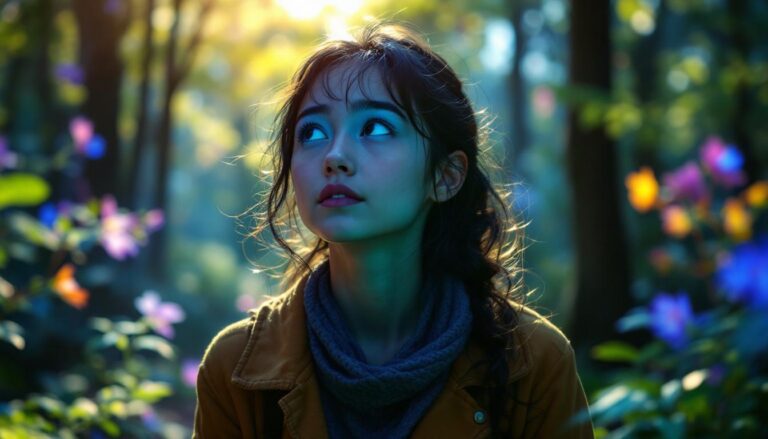

Imagine walking through a gallery filled with stunning works of art, the walls adorned with vibrant colors that explode with life. Now, picture navigating this space not just with your eyes, but with an expanded palette of colors, ones that slip beyond the grasp of any other species. It sounds like a scene from a sci-fi film, but it’s the intriguing reality of human perception of color. The phenomenon of unique colors existing solely in the human experience is a captivating glimpse into the complexity of color visibility.
This Colour Exists for Humans but No Other Animal Can See
Did you know that humans are capable of perceiving a unique color that no other animal can replicate? 🦋 While many animals enjoy a kaleidoscopic vision beyond our understanding, like bees that flit about in ultraviolet hues, our advantage lies in the nuances of our own color spectrum. This particular color, often referred to as “impossible shades”, remains cloaked from the eyes of our animal kingdom companions. Surprising, isn’t it?
The Hidden World of Animal Vision
Animals are equipped with a variety of visual systems far superior to humans in some aspects. Nature has bestowed them with incredible adaptations. For instance:
- 🐶 Dogs have dichromatic vision, seeing blues and yellows but lacking red perception.
- 🐦 Birds, especially those with tetrachromatic vision, visualize an array that includes infrared and ultraviolet hues, transforming their surroundings into a vibrant tapestry we can barely fathom.
- 🐙 Some cephalopods, like octopuses, excel in detecting polarized light, granting them access to a visual reality entirely alien to humans.
Every creature occupies its unique ecological niche, where the colors they can detect are crucial for survival, foraging, and communication. Such adaptations raise intriguing questions about the very nature of color detection and its significance in the animal world.
The Science Behind Color Perception
The basis of all color vision is grounded in the biology of color vision, where specialized cells in our retinas called photoreceptors play a vital role. In humans, three types of cone cells respond to red, green, and blue light. But imagine how vibrant the world must appear to a creature with additional types of cones! The journey of color begins with light and ends with perception—a harmonious blend of physics and biology that has evolved over millions of years.
The ancient star myth that’s actually true — and it changes how we see the sky
The Ultraviolet Advantage
What truly sets our visual experience apart is our inability to see ultraviolet (UV) light. Animals with this ability exploit it for various reasons:
- 🌷 Foraging: Flowers often have patterns visible only in UV, attracting insects that can see them, while humans miss these crucial markers.
- 💙 Mate Selection: Birds may display feather patterns that radiate UV light, offering potential mates insights that remain a mystery to humans.
- 🔍 Predator Detection: Some prey, like rodents, emit UV markings through their urine, allowing hunters to track them more easily.
This hidden color world serves not only as a striking reminder of nature’s creativity but also emphasizes our limitations in understanding it.
The Evolutionary Significance of Color Vision
We often overlook the evolutionary undercurrents shaping how animals perceive their world. The evolution of color vision in various species can be traced back to their respective survival strategies and habitats. For instance, primates evolved the ability to distinguish ripe fruits in green foliage, while nocturnal mammals often rely on movement and light intensity rather than color differentiation.
By enhancing color vision, species adapt to their environment in profoundly beneficial ways, a testament to the ongoing dance of evolution.
Why Humans Can’t See UV Light
Understanding why our vision lacks the ability to perceive UV light opens a window into the story of human evolution. Our ancestors developed their visual capabilities based on survival demands in their environments, focusing primarily on detecting color variations that influence foraging and social interactions.
While we possess vibrant visual capabilities, they remain confined to the visible light spectrum—a cozy but limited corner of an immense universe filled with colors beyond our imagination.
Feeling curious? Why not venture into exploring these hidden colors further? Dive into the extraordinary science of color and the ways animals experience their world in ways you may never have thought possible. Until next time, keep your eyes peeled and your imagination wide open!