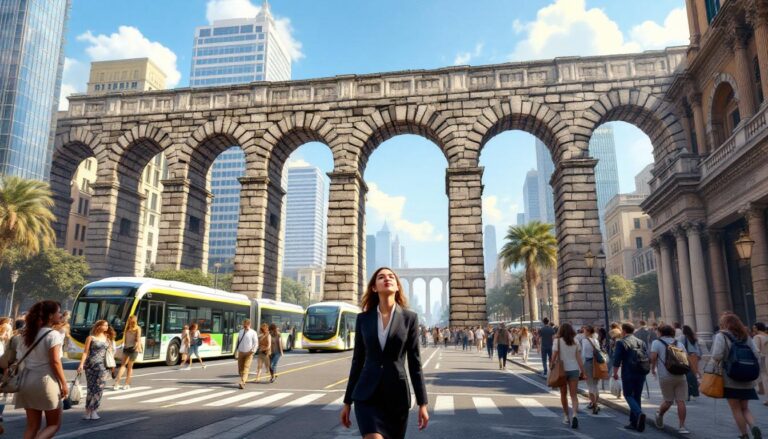

Ever wondered how the colossal achievements of Roman emperors influence your daily commute? It’s a fascinating thought that has stirred countless conversations over the years! As we hustle through the city streets, zip along ancient roads, or even hop on a bus, we’re riding on the legacy of an ancient empire that revolutionized the way we think about transportation. Buckle up, because we’re about to dive into some astonishing historical insights!
The Evolution of Transportation: A Roman Legacy
One of the most captivating facts about the Roman Empire is its pioneering innovations in urban planning and infrastructure. The vast network of Roman roads, which stretched over 250,000 miles, served as the backbone of travel and trade across the empire. Can you imagine navigating your city without these historical pathways?
Key Takeaways from Roman Innovations 🚀
- Road Builders Extraordinaire: Romans perfected road construction, laying down durable surfaces that minimized travel time.
- Transportation Evolution: Horse-drawn carts to advanced public transport; it’s all about efficiency!
- Connecting Communities: Roman roads facilitated trade, culture exchanges, and cultural integration — remarkably similar to today’s public transport systems!
“Curiosity is the compass that leads us to our next destination.” — Anonymous
Public Transportation: From Chariots to Buses 🚌
Jumping on a bus or train today is not only about getting from A to B; it’s a part of our daily commute that embodies centuries of evolution. The Romans initiated the concept of public transport, with horse-drawn carriages known as cisium offering affordable rides for the masses. Fast forward to today, and we can see that the spirit of Rome still lives on, with networked mass transit systems dominating urban landscapes.
Lessons from the Roman System 🌍
- Accessibility Matters: Build inclusive transportation that everyone can enjoy, just as the Romans made travel accessible!
- Safety First: Incorporate measures that ensure the well-being of commuters — a continuing need since ancient times.
- Multi-Modal Options: Encourage combining travel modes like cycling and public transport to alleviate congestion.
Ancient Infrastructure: The Foundation of Modern Cities 🏙️
Roman emperors took pride in constructing impressive public facilities, such as aqueducts and baths—places that fostered community interaction. This approach to urban planning has undeniably influenced modern cities, wherein public spaces and connectivity lie at the heart of development. Isn’t it interesting how such ancient designs resonate with the principles of current city planning?
The historical item we still use the same way — the story will blow your mind
Urban Design Fundamentals 🔑
- Community Spaces: New parks, plazas, and pedestrian zones encourage social interactions.
- Enabling Connectivity: Well-planned layouts increase mobility and reduce travel times.
- Preserving History: Blend historical architecture with modern design, reminding us of our heritage.
Conclusion: Embracing the Roman Spirit in Transit 🚦
From the enduring legacy of Roman roads to the public transport system we cherish today, the historical influence on our daily commute is nothing short of captivating. As we navigate our modern cities, it’s exciting to reflect on how ancient concepts continue to underpin our lives. Whether commuting to work or exploring new places, take a moment to appreciate the incredible journey—from the innovations of Roman emperors to our everyday experiences. Cheers to curiosity and the wonders of history!